INTRODUCTION
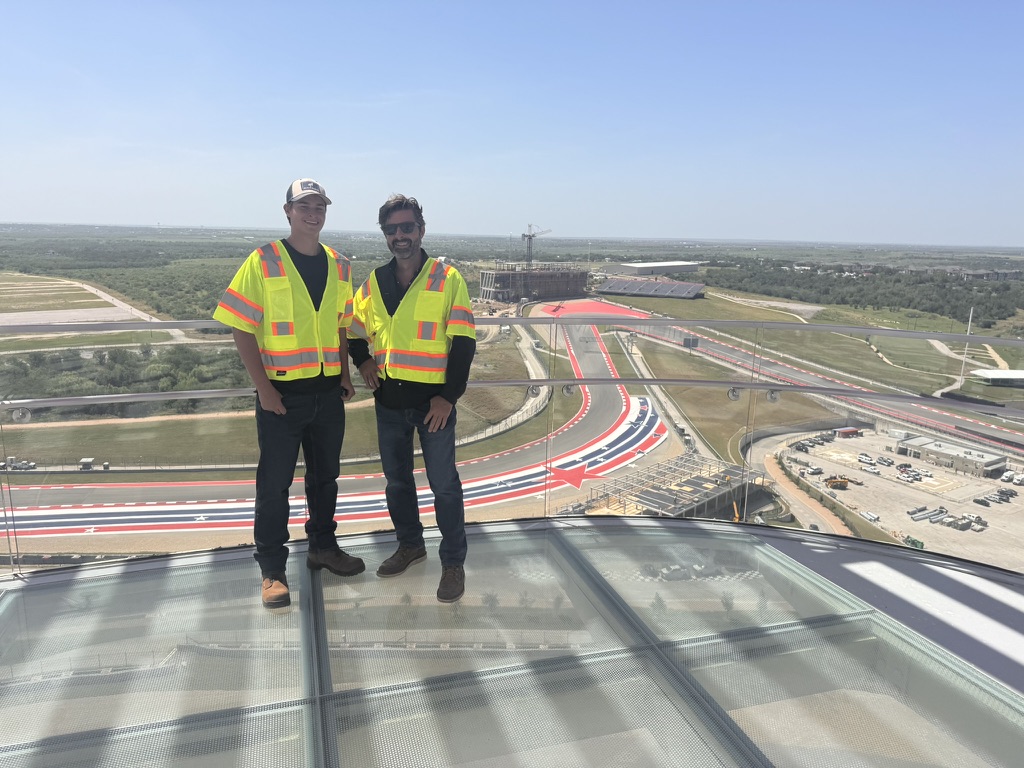
Nobody thinks about a road. That’s basically the test of a good one — pavement only gets your attention when something is wrong with it, when it’s cracked or patched or rattling your teeth through the steering wheel. This summer, I interned with Lone Star Paving, an asphalt contractor here in Austin, and I got to work on the rare exception to that rule: the Circuit of the Americas. A racetrack might be the only road on earth where people genuinely care about the surface, because those using it are doing 200 mph and feel every ripple through the wheel. I found it kind of funny. And ironic how my first informational post on this blog was about the civil engineering that goes into racetracks and now I get the chance to experience the things I just wrote about. The experience ended up being a lot of fun, a lot of heat, and a lot of hard work, and I’m really excited to share it with y’all
Creation of Asphalt
The first surprise was how simple the recipe is. Asphalt is pretty much two ingredients: crushed rock, commonly known as aggregate, and a binding agent, plus a whole lot of heat. Roughly 95 percent of the mix is aggregate, stone, sand, and gravel crushed and sorted by size, and the last 5 percent or so is the binding agent, usually bitumen, the black, sticky binder left over at the bottom of the oil refining process. That’s it. Everything that makes a road good or bad lives inside that “or so”: the exact blend of rock sizes, the grade of the binder, the temperature it all comes together at. Different jobs get different recipes, too. A neighborhood street gets one mix; a surface that has to hold a race car sideways through a corner gets a very different one, engineered for grip and for shear forces a normal road will never see.
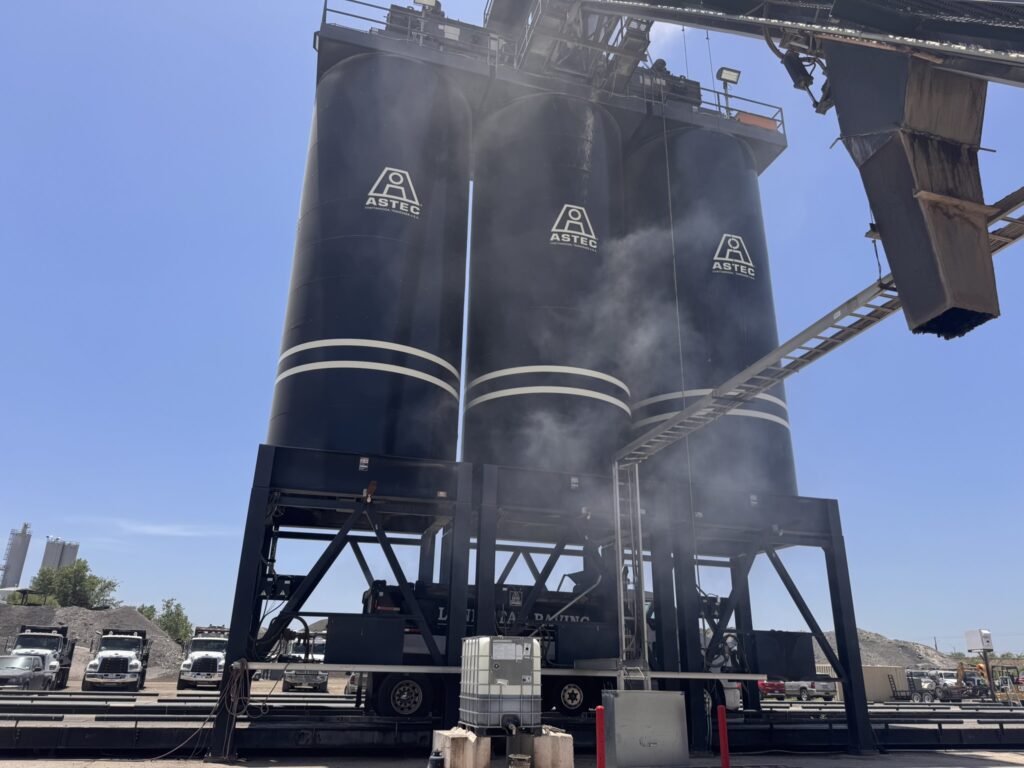
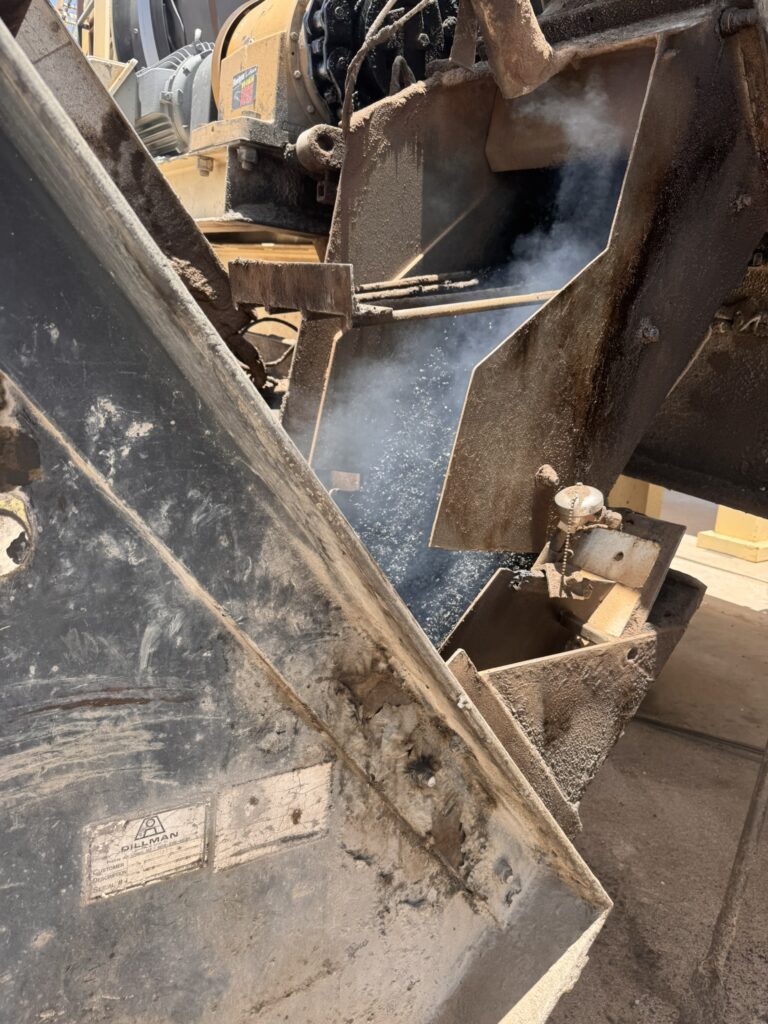
I got to watch it all come together at the plant, and the best way I can describe it is an enormous, very hot kitchen. Aggregate comes in off the stockpiles, gets dried and heated in a rotating drum to around 300 degrees, meets the liquid binder, and comes out the other end as hot mix — which is then transported up a conveyor belt into large metal silos, which use the heat of the mixture and the environment to keep the asphalt fresh for long periods of time. What stuck with me is how much of a road exists before any of it ever touches the ground: the mix designs, the lab testing, the temperature logs, the trucks timed against the paver like a supply line. The craziest part for me was the whole perfectionism about the operation; most people see construction-oriented fields as rugged jobs that require no precision whatsoever. What they fail to realize, however, is that even one small mistake can’t just be paved over and forgotten about or thrown away like a bad batch of cookies; everything you’ve worked on has to be torn up and removed, which can set back hours or even days of progress
Paving the Road
Out at the track, paving turned out to be choreography. First the old surface gets milled off and swept clean, then a tack coat goes down, which is a thin, sticky layer that bonds the new asphalt to what’s underneath. Then comes the paver, crawling forward at around 8 feet per minute. Most jobs can get up to forty feet per second, but the precision needed to get this right slowed the process down. In the video below, you can observe all 3 parts of the paving process. The first step utilizes dump trucks to pour the freshly mixed asphalt from the plant into what’s called the shuttle buggy (Yellow vehicle), which is essentially a cement truck but for asphalt. The shuttle buggy moves the asphalt around, remixing it to eliminate segregation and create a more uniform mat. Once that is complete, the shuttle buggy pours the mixed asphalt into the paver behind it. Finally, the paver lays the asphalt on the track and uses its own weight to press it into the ground. Nothing in this 3-layer parade gets to stop, because the mat is cooling the whole time; a delay you’d shrug off on a normal job can cost you an entire pull. And the standards at COTA are on another level from a city street. A bump you’d never notice at 40 mph is a real problem at 200, so smoothness gets measured to tolerances that seem almost unreasonable until you remember who the customer is. Add in the track’s elevation changes and banked corners, and every pass gets harder.
Then there’s the part no diagram prepares you for: doing all of this in a Texas summer, standing next to a fresh mat that’s radiating 300-degree heat back at you. My job changed throughout my time there, some of it at the plant, some of it out on the track with the crew, but most of what I actually learned came from watching the people who do this for a living. They read the mat the way pilots read instruments: checking temperatures, watching for segregation in the mix, adjusting roller patterns pass by pass, running density tests behind it all to prove the numbers. Problems came up constantly, because that’s just what a job site is. The skill wasn’t avoiding them; it was catching them while they could still be fixed.
CONCLUSION
Here’s what it comes down to: a summer is long enough to find out whether something fits. When I wrote about aerospace, I came away impressed but pretty sure it wasn’t my field. This felt different. There’s something about civil work that suits me, the scale of it, the permanence, the fact that what you build gets used by everyone and noticed by no one. I came out of the internship with a decent tan, a pair of boots that finally fit right, and something more useful than either: a real picture of what this career looks like from the inside.
Race cars will lap that circuit for years, and nobody in the stands will ever think about what’s under the tires. That’s the whole point — good pavement is invisible. But every smooth mile out there is the same thing I keep finding everywhere in engineering: a chain of small, careful decisions made by people who had to get every one of them right. Rockets come down. Roads stay put. For one summer, I got to be one of the people who built them.