OVERVIEW
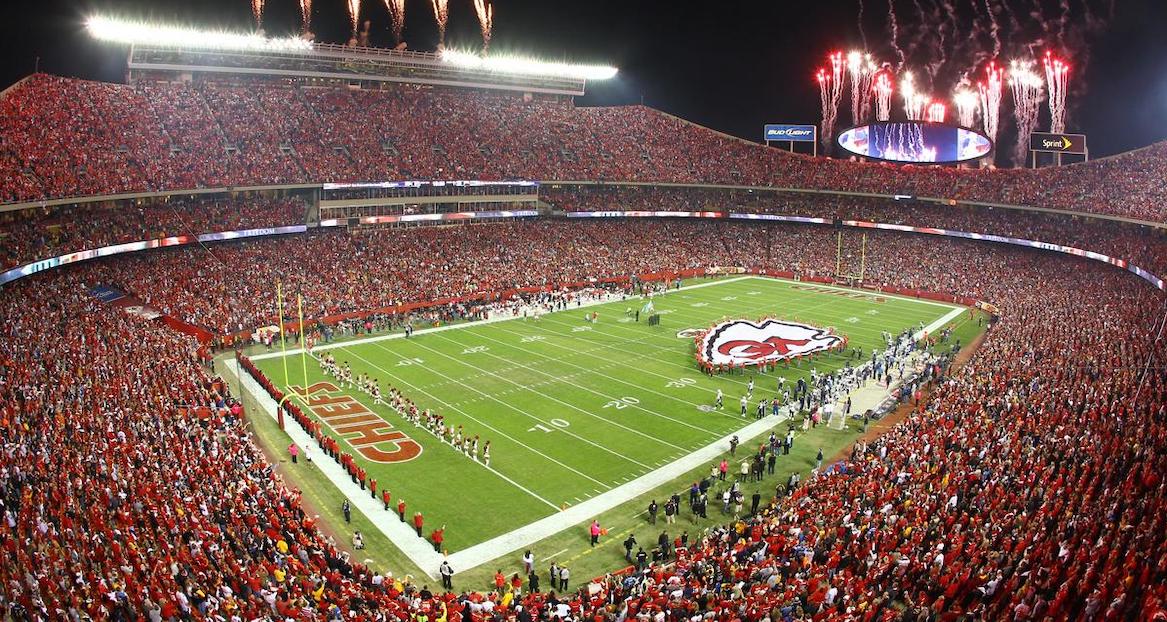
Think about the last time you walked into a stadium. Maybe it was a playoff game, a concert, or just a random Tuesday night matchup you couldn’t pass up. You probably remember the smell of the concessions, the noise hitting you the moment you stepped through the tunnel, the way the field looked almost impossibly green under the lights. What you almost certainly didn’t think about was the soil underneath your feet, the drainage system beneath the playing surface, or the structural calculations that keep 70,000 people from plummeting into the lower bowl.
That’s kind of the point. When engineering is done right, you don’t notice it at all.
But stadiums are genuinely remarkable things. They’re among the most complicated structures civil engineers ever get asked to build — not because of any single dramatic challenge, but because of how many different problems have to be solved at once. A skyscraper is essentially a vertical stack of floors. A bridge has one primary job. A stadium has to be a functioning city block, a structural landmark, a transportation hub, and a crowd management system, all rolled into one — and it has to be ready for showtime every single week.
The engineers who pull this off rarely get a curtain call. But their work is everywhere you look.
BUILDING PROCESS
It Starts Long Before Anyone Swings a Hammer
By the time construction begins on a major stadium, engineers have already been working on the project for years. The first question isn’t “what will this look like?” — it’s “can this piece of ground even hold it?” Geotechnical engineers drill 30 meters or more into the earth, pulling up core samples to find out what’s actually down there. The answer determines everything. Solid bedrock near the surface is a gift. Soft coastal soil means driving hundreds of piles deep until you find something solid.
Engineers also have to predict how the ground behaves over time. Soil compresses under sustained load, so a stadium will slowly settle — which is fine, as long as it settles evenly. The nightmare is differential settlement, where one section sinks more than another, tilting the seating and cracking the walls. Getting the foundation right from the start is how you avoid expensive headaches 20 years later.
The Geometry of Safety
A stadium isn’t one structure — it’s several stitched together. The lower bowl is almost always reinforced concrete: heavy, durable, and good at absorbing the constant vibration of thousands of fans. The upper tiers and roof use long-span steel, with trusses that can stretch 200 meters across open air without a single column blocking anyone’s view.
Then there’s the cantilevered upper deck, which is its own engineering tightrope. To get fans close to the action, the upper seating projects outward beyond its last support column — essentially a horizontal diving board holding thousands of people. When a crowd jumps to its feet after a goal, all that energy has to go somewhere. If it happens to match the deck’s natural frequency, the vibrations amplify, and things get uncomfortable fast. Engineers model these frequencies carefully and sometimes hide tuned mass dampers — large weighted pendulums — inside the structure to absorb that energy before it builds.
Plumbing, Power, and Quality Control
Consider halftime at a sold-out game: 70,000 people, 12 minutes, one bathroom break. That single window drives a huge amount of engineering. The pipes, holding tanks, and pump stations have to handle a surge of flow that would overwhelm a typical municipal system. Stadium lighting has to hit 2,000 lux of shadow-free illumination for broadcast cameras, backed by generators capable of running life-safety systems for hours if the grid fails.
Once construction is underway, engineers shift into inspector mode — concrete cylinders are crushed to verify strength, welds are checked by ultrasonic testing, bolted connections are torqued to spec. None of it is exciting. But skipping it is how small problems become catastrophic ones when the stadium is full of people.
CHALLENGES IN THE FIELD
The Physics of 70,000 People
A single upper-deck section holding 10,000 fans adds roughly 750 tons of live load — and unlike the building itself, that load moves. When a crowd surges in unison, the impulse forces far exceed what a static calculation would suggest. If that rhythm aligns with the natural frequency of the structure, you get resonance: vibrations that amplify rather than dampen. Engineers use finite element models, physical testing, and, in modern venues, real-time monitoring to stay ahead of it.
Getting Everyone Out Alive
The most important thing a stadium must do is ensure everyone can leave safely in an emergency. Building codes set minimum exit widths and flow rates. Still, engineers go further — running crowd simulations that test thousands of scenarios to find where bottlenecks form and how long a full evacuation really takes. Those results shape decisions about stairwell widths, the placement of vomitories (the tunnels connecting the seating bowl to the concourse), and door counts. Done well, it’s invisible. Done badly, it’s a tragedy.
Weather Doesn’t Care About Game Day
Stadiums have to handle whatever the climate throws at them for 50 years or more. Engineers test scale models in wind tunnels to measure pressures on the roof and canopies; in hurricane zones, design winds can exceed 125 mph. Rain has to drain off the playing surface fast enough that a downpour doesn’t cancel a game. In cold climates, snow loads have to account for wind drifting — which can concentrate three or four times the average load in specific spots — and roof drainage has to shed meltwater before it backs up into ice dams.
Traffic: The Problem Nobody Fully Solves
A sold-out event sends 70,000 people to one location in a few hours, then pulls most of them back out in 30 minutes. Traffic engineers use demand models and microsimulation to optimize signal timing, design parking structures that actually empty efficiently, and plan transit connections that shift enough fans onto trains and buses to keep the roads from completely seizing up. The pedestrian connections — the walkways between transit stops and stadium gates — matter more than most people realize. A poorly designed path creates a bottleneck that backs up across the street. The details are small. The impact is real.
CONCLUSION
Here’s what it comes down to: the next time you’re at a game, and everything just works — you walked in easily, found your seat without getting lost, the field drained perfectly after that mid-game downpour, you made it out to the parking lot in a reasonable amount of time — that’s not luck. That’s engineering.
Somewhere in the history of that stadium is a geotechnical report that told an engineer exactly how many piles were needed and how deep they had to go. There’s a structural analysis that determined the exact dimensions of the roof truss above your head. There’s a drainage study that sized the pipe under the field. There’s a traffic model that predicted, with reasonable accuracy, how long it would take you to get home.
None of those people will get a jersey retired or a trophy handed to them on a stage. Most fans couldn’t name the engineering firm that designed their home stadium if you asked them. But the work they did is what makes the whole experience possible — every game, every season, every year.
The stadium is the stage. But the engineers built it.
Sources
“Building CPKC Stadium.” American Society of Civil Engineers, 1 Aug. 2005, ascelibrary.org/doi/10.1061/(ASCE)1084-0680(2005)10:3(181). Accessed 8 June 2026.
“Chicago Bears Rule out Chicago as Domed Stadium Site.” Engineer News-Record, 22 May 2026, www.enr.com/articles/63046-chicago-bears-rule-out-chicago-as-domed-stadium-site. Accessed 8 June 2026.
“SDSU Stadium Construction Requires Complex Demolition, Infill Work.” Engineer News-Record, 12 Apr. 2022, www.enr.com/articles/53917-ucsd-stadium-construction-requires-complex-demolition-infill-work. Accessed 8 June 2026.